Who We Are
Save Our Cities is a non-profit organization with the purpose of engaging our community in combating the rising sea level by taking the necessary actions to prevent climate change.
Our Purpose
The main objective of Save Our Cities is to publicize the causes that lead to rising sea levels and promote the actions that must be carried out to reduce the consequences.
Educate the public
Collect funds and volunteers
Take action against global warming


Provide the public with the necessary knowledge to become aware of the phenomenon of rising sea levels and the impact it causes.
Collect the necessary resources to implement solutions in local areas.
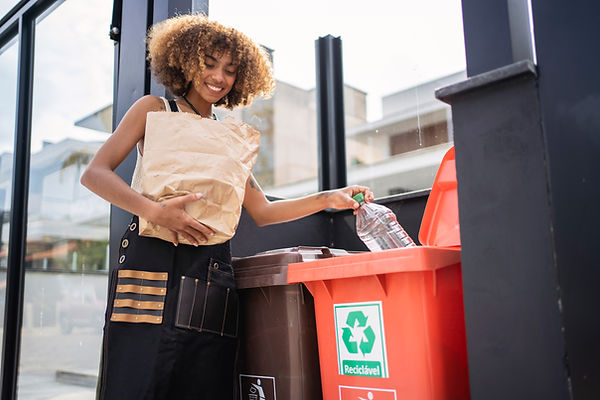
Put solutions into practice such as the use of bikes instead cars and recycling materials to avoid global warming which will help the decreasing sea level.
Contact Save Our Cities


Defining the Problem
The National Geographic Society defines sea level rise as “A rise in the level of the world's oceans due to the effects of global warming.” According to Sealevelrise.org, “In the past decade, the rate at which Florida's sea level has increased and is now rising by as much as 1 inch every 3 years” (“Florida's Sea Level is Rising”). According to Climate NASA, global “warming is the long-term warming of the Earth's climate system observed since the pre-industrial period (between 1850 and 1900) due to human activities, mainly the burning of fossil fuels, which increases the levels of greenhouse gases that trap heat in the Earth's atmosphere” which makes the earth warm and gives off heat to the atmosphere (“Global Warming vs. Climate Change”).
History
The rise of sea levels in the remote past has not been done gradually, but in rapid waves, jumping up to 50 feet in a short period of three centuries. An article published by Rutgers.edu states that “Modern rates of sea-level rise began in 1863, with the progress of the Industrial Revolution, whose technical and scientific innovations fueled its development” (“Modern Sea-Level Rise Began in 1863”). The beginning of industrial development brought one side of enormous advantages like machinery innovation and increasing production levels, but another side of shocking long-term consequences like pollution and global warming.


Causes
According to Sealevelrise.org, “There are four causes of sea-level rise in Florida. Melting ice from the North and the South Poles slowing of the Gulf Stream are the two largest contributors. Because the rate of ice melt has been increasing significantly since 1992, and the freshwater melting into the ocean has been slowing down the Gulf Stream, Florida is particularly vulnerable to an increased rate of sea-level rise in the future” (“Florida Sea Level is Rising”).
Effects
The rise in sea level brings as a consequence floods due to high tide, threatening the life of living beings. In addition, the property values in Florida have fallen because of rising seas, “Florida lost about $5.4 billion in home value from 2005 to 2017 due to rising sea levels” (Porter). Property insurance had been affected due to rising sea levels. In an article published by Carroll, he states, “sea-level rise and climate change, 2021 Florida’s insurance carriers have applied for 26% to 34% rate increases on property insurance.” According to Ruppert, “approximately 6.5 inches of sea-level rise cause flooding with high tides”.

Rising Sea Level Solutions
Rising sea level is a problem that is currently affecting many places around the world, including Florida. Due to this situation, the communities must focus on the search and implementation of solutions, considering that the future predictions of sea levels are not favorable. The main cause of rising sea levels is global warming and its effect on climate change, so possible solutions should be aimed at remedying these problems.

Raising Roads
Elevating roads above sea level is one of the ideas that has been carried out and is intended to continue because it reduces tidal flooding by helping to drain the water. According to an article published by SeaLevelRise.org, “In order to make sure that higher roads don’t channel flood waters to homes and stores at lower elevations, cities often use stormwater pumps to remove this excess water” (“Solutions Can Protect Coastal Communities”). The cities that are most trying to carry out this project are those that are close to beaches, as well as the Florida Keys and all those cities that are on the edge of the east and west coasts. Based on experience from previous years, although the time to execute this project is relatively short, approximately two years, representatives of this project in Monroe County say that the price would be too high. Rupper stated that “The estimated cost to keep a three-mile stretch of highway dry from the predicted 2060 flooding is $181 million, or more than $60 million per mile” (1).


Using Beaches as Barriers
To help reduce the impact of storm surges, sand on beaches and dunes can act as natural walls. The longer the beach, the more space in the city would be protected by that wall of sand. In some towns, extra amounts of sand can be poured onto the beaches to enlarge these walls. In an article published on NBC News, Bennington argued that “Barriers can fail, even when they don't, they can have the unintended consequence of harming delicate coastal habitats and the animals that live in them”. According to the previous statement, this could be a possible solution, but effective in the short term, in addition to the fact that the cost of performing this task could be very expensive. The authorities of Miami Beach ordered to pour some 61 thousand tons of sand on the beaches for combating rising sea levels, and the cost was 16 million USD (“Combat Rising Sea Levels”). In addition to the great cost of money that this fact entails, sand erodes with tides and storms, so it is a short-term solution.


Reduce Greenhouse Gas Accumulation
One of the effective ways to reduce rising sea levels is to avoid global warming since it is one of the main causes of this phenomenon. Some predictions indicate that the continued rise in sea level will depend on the trajectory followed during these years. According to Flesher, “Twenty-eight South Florida mayors have signed an agreement to take steps to reduce emissions of greenhouse gases in their cities, such as buying low-pollution vehicles and requiring new buildings to be energy efficient” (1). Protecting nature is a fundamental point that can be carried out from day to day at home, even in large magnitudes from the command of governments. To promote green energy, opting for wind, solar, geothermal, and ocean energy, nations could stop opting for current energy sources and focus more on these projects, which are expensive in the first instance because of the high cost of these technologies and the cost of adapting the place for these technologies but it would bring great benefits in the long term. Despite being an expensive investment, “the energy sources will pay for themselves over time” (“The Benefits of Using Renewal Energy”). Because traditional energy sources “generate carbon dioxide and emissions that pummel the atmosphere, trap heat, and impact the environment and human health”, the use of these renewable sources helps fight against global warming (“The Benefits of Using Renewal Energy”).

Recommendations
This section will cover some of the possible solutions and what could be the most effective in Florida, considering some factors, including cost and effectiveness. After analyzing four possible solutions to combat sea-level rise, the creation of stormwater prompts seems quite effective in terms of cost and speed. This option would be like having an escape route for each time the flood events occur, something that must exist because we need to have solutions for the events that can affect us but applying the reduction of greenhouse gases would be more like cutting the root problem.
Carbon dioxides accumulate in the atmosphere, preventing the release of heat emitted by the earth, which causes widespread global warming. The use of renewable energy sources like wind, solar, and hydropower “can be used for electricity generation, space and water heating and cooling, and transportation” (“Renewable Energy”). The use of electric or hybrid cars is one of the options that will reduce carbon emissions. Hydropower is one of the most effective options in Florida since it can take advantage of the number of canals and rivers that this state has. According to Veterans off Grid, “It can divert some or all of the stream or river to create hydroelectricity to power the home running a hydroelectric generator that will generate electricity for business or home” (par. 12). Solar panels are another effective alternative in Florida since the sunny weather almost all year round favors it. Solar panels are usually installed on rooves “converting the sun’s rays to electricity, which householders can use themselves while selling the excess to the local power grid” (“The Benefits of Using Renewable Energy”).
On the other hand, the manufacturing of such products leads to the emission of carbon dioxide, so the recycling of materials can help make a change, since not having “to manufacture new materials allows avoiding the emission of gases from the extraction and processing of raw materials”, thus helping to reduce greenhouse gas emissions (“Reducing and Reusing Basics”).